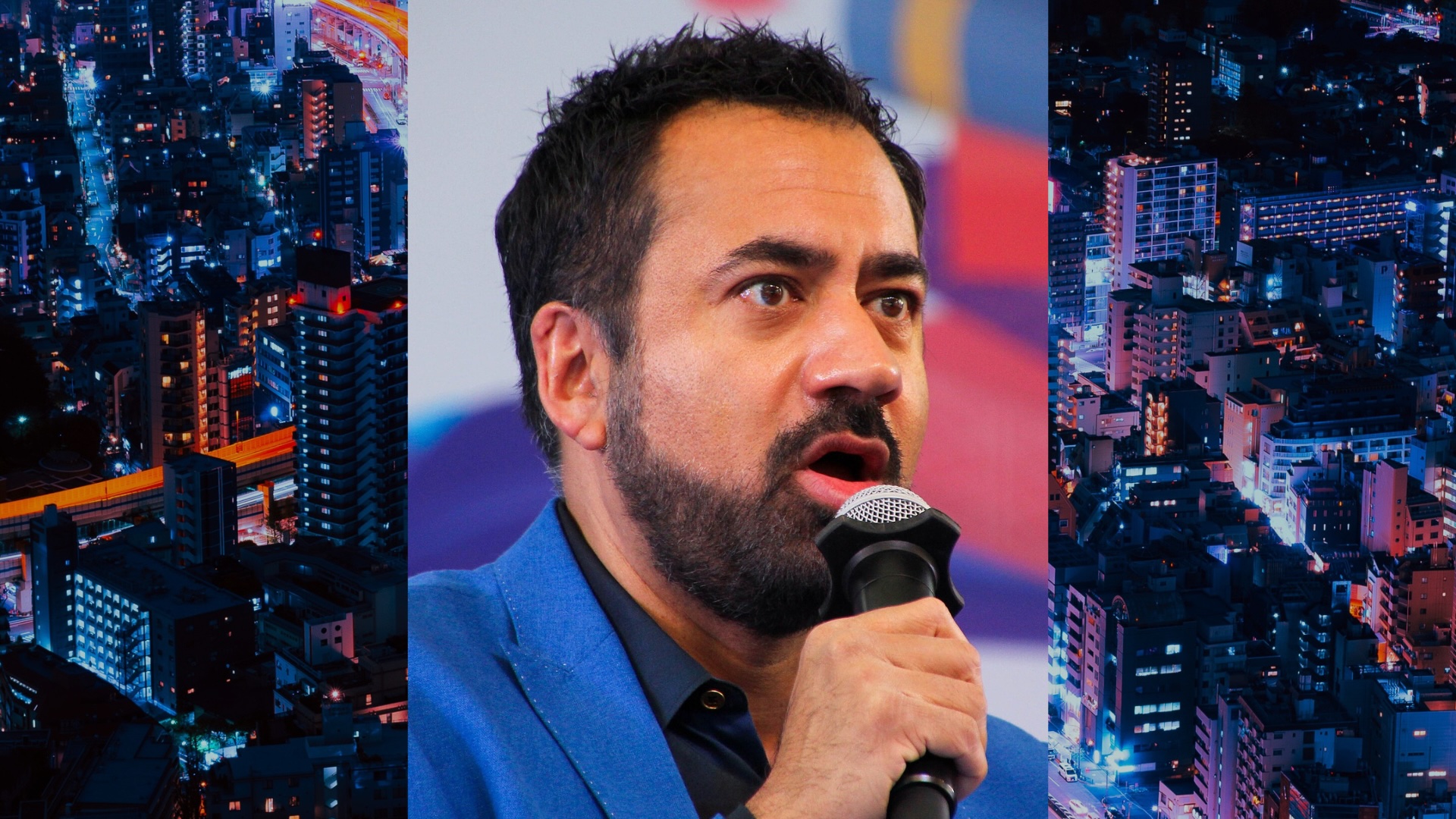
Caption: Kal Penn at the 2025 Jaipur Literature Festival (cropped). Wikipedia – Sriya Sarkar – Own work
This article contains affiliate links. If you buy something through them, we may earn a small commission at no extra cost to you.
Written by the Speak Up! Team
The Namesake (2006) is worth watching if you have ever shortened, softened, or explained your name at work. It reads best as a film about personal brand: a name inherited, rejected, and finally understood. It is a slow, quiet drama that will give you time to introspect.
The film is based on the book by best-selling author Jhumpa Lahiri, which received rave reviews such as this one: “Pulitzer Prize winner Jhumpa Lahiri brilliantly illuminates the immigrant experience and the tangled ties between generations. Namesake is a fine-tuned, intimate, and deeply felt novel of identity from “a writer of uncommon elegance and poise.” (The New York Times)
Directed by Mira Nair, the film is based on Jhumpa Lahiri’s novel, sold in different formats such as audiobook, paperback, and translation into different languages. It tells the story of the Ganguli family and the challenges of balancing Indian heritage with American life. The novel and the film follow different paths so just for clarification purposes, we are referring to the film in this review.
The cast includes Kal Penn, whose birth name is Kalpen Suresh Modi, as Gogol; Tabu as Ashima, and the well-known actor Irrfan Khan as Ashoke. Film Forum’s page lists the whole cast. Prime Video listing credits Nair as director and describes the film as based on the novel.
The plot, cast, and streaming details are easy to find. What review pages don’t offer is a reading of Gogol’s identity crisis reflected in his name, the first piece of a personal brand, which is the angle we’re taking in this article.
What is the meaning behind The Namesake?
A name is the first piece of a personal brand we do not choose. It is the “given” name, the first and one powerful message our parents set upon us, sometimes unconsciously. If you were ever curious about the meaning of your name, you can check it here. The film follows a fictional character that spends years treating that legacy as a problem to manage and finally discover what it holds.
Personal branding, in one sentence, is the deliberate practice of understanding and communicating what makes you credible and distinctive; my definition of personal branding goes deeper.
Why does Gogol want a different name?
Gogol struggles with his given name because of the numerous occasions he drops his name for Nikhil because it makes him easier to place and spares him the explanation. In college he introduces himself as Nikhil, or “Nickie” and for a while the move works: the questions stop.
He gains ease but loses the thread back to his family and his ancestry. The film shows that cost without shouting about it. The information of the real meaning has been withhold from him until the final scene, where his father reveals the true meaning of the story. Watch it here:
Many first-generation professionals make a version of this choice. They shorten a name, anglicize the spelling or accept a nickname that a colleague can say on the first try. I see this as a tendency, not a rule, and the choice is personal: neither keeping nor changing a name is right or wrong.
What does his father’s story add?
Ashoke’s story shows Gogol that the name he rejected carries survival and love. His father explains why he chose it, tied to the night he nearly died and the book he was holding.
Until then Gogol has asked an outside-in question: how do others pronounce me? The scene turns it into an inside-out one: what does my name hold?
That turn touches all four pillars of the inside-out approach I teach. The name carries values (what his father valued enough to name a child for), character (resilience), cultural attributes (a Bengali naming tradition in an American setting) and, eventually, leadership interaction skills, because Gogol learns to bring his history into rooms instead of leaving it outside. Conventional definitions of Executive Presence rarely count any of this, which is the blind spot in how executive presence is defined.
What can a professional take from Ashima’s quiet strength?
Ashima’s narrative arc shows that being deeply rooted in your own ancestry and traditions is a leadership trait. She arrives isolated, builds a life in a country that does not know her, even rejects her, and ends the film choosing how to divide her time between two homes.
Almost no checklist for Executive Presence includes that kind of steadiness. Yet colleagues from Latin America, West Africa, East Asia and Europe describe the same experience: carrying a name across borders and being asked, again and in many ways, to simplify it.
Where and how your name appears professionally matters too. Personal branding on LinkedIn is the work of making the reputation you already have legible in public, on the one platform where colleagues, recruiters, and clients go to look you up before they meet you. Your profile is often the first place people meet it, so LinkedIn for multicultural personal branding is a practical place to decide how it shows up.
What is the significance of The Namesake in your professional life?
By the end of The Namesake, Gogol Ganguli finally opens the book his father gave him years earlier, a collection of stories by the Russian writer whose name he spent half his life trying to escape. It took losing his father to understand that the name he rejected was never a burden. It was a story: a train crash, a book held in a survivor’s hand, a father’s gratitude for a second life. The name only felt foreign because no one had ever told him what it meant.
See the trailer here when the father reveals the name’s meaning to his son: https://youtu.be/Jgv93j5xcpQ?si=SSGn4PKWHA866zq4
Many first- or second-generation immigrant professionals live some version of Gogol’s journey, only it happens in conference rooms instead of family dinners. We shorten our names so they are easier to pronounce. We drop the story of the business we built in another country because it doesn’t fit the résumé template. We learn to sound like the leader we think the room expects. That is leadership built from the outside in, and like Gogol’s years as Nikhil, it works until the day it doesn’t. Under pressure, the borrowed identity is the first thing to crack.
The lesson of the film is not that we should refuse to adapt. Ashima, Gogol’s mother, adapts more than anyone: she learns to live in a new country, raises American children, and builds a life far from everything she knew. But she never stops being herself, and at the end she chooses where she belongs on her own terms.
That is the balance I write about in Speak Up!: adapting how you express yourself without erasing what is true about you. Your values, your character, and your cultural attributes are not obstacles to manage. They are the raw material of your professional brand.
So before you shorten your name or edit your history to fit someone else’s idea of a leader, ask yourself whether anyone in the room knows what that name means. Tell the story behind your name, your accent, and your journey, and let it become the reason people trust your judgment, not the detail they politely overlook.
Is there a heritage celebration this month?
Diwali season is close, and the festival is about light and ancestry. Diwali, or Deepavali, is the major multi-day festival of lights celebrated by Hindus, Jains, Sikhs, and some Buddhists, [1, 2] which fits a film about honoring where a name comes from. The date moves each year, between mid-October and mid-November.
Where can you watch The Namesake, and what else has Mira Nair directed?
As of 20 October 2026, the Prime Video page lists The Namesake with an HD label, but I could not confirm from it whether the film is included with a subscription or offered to rent or buy. Check the current listing on Prime Video or your usual platform before you plan an evening around it.
Nair’s other work is documented in her Wikipedia filmography, including Salaam Bombay!, Mississippi Masala, Monsoon Wedding and Queen of Katwe. For the full topic of how identity becomes brand, start with the personal branding hub.
Who should skip it, and what to try instead?
Skip the film if you want fast pacing or practical career advice, because it offers neither. Its lessons arrive through patience and silence.
If you want more of the story, read Lahiri’s novel or watch another Nair film. If you want the career-side version, my book Speak Up! builds a personal brand from your own background.
The free worksheet on your name and your story is where you can start doing this work for yourself.
FAQ
What is the meaning behind the movie The Namesake?
It is about an inherited name and the identity attached to it. Gogol rejects his name to fit in, then learns it holds his father’s story of survival and love.
What films has Mira Nair directed?
Her filmography includes Salaam Bombay!, Mississippi Masala, Monsoon Wedding, Queen of Katwe and The Namesake. See her Wikipedia filmography for the full list.
Which OTT platform is The Namesake on?
As of 20 October 2026, Prime Video has a page for the film. Availability changes, so check current listings.
Is The Namesake based on a book?
Yes. It is based on Jhumpa Lahiri’s novel, as the Prime Video listing notes.
Why does Gogol change his name to Nikhil?
He wants a name that is easier for others to say and place. Later he understands what he gave up when he set aside the name his father chose.
If your name has ever felt like a negotiation, explore my work at susanagbaumann.com.
Edited with AI