This article contains affiliate links. If you buy something through them, we may earn a small commission at no extra cost to you.
Written by the Speak Up! Team
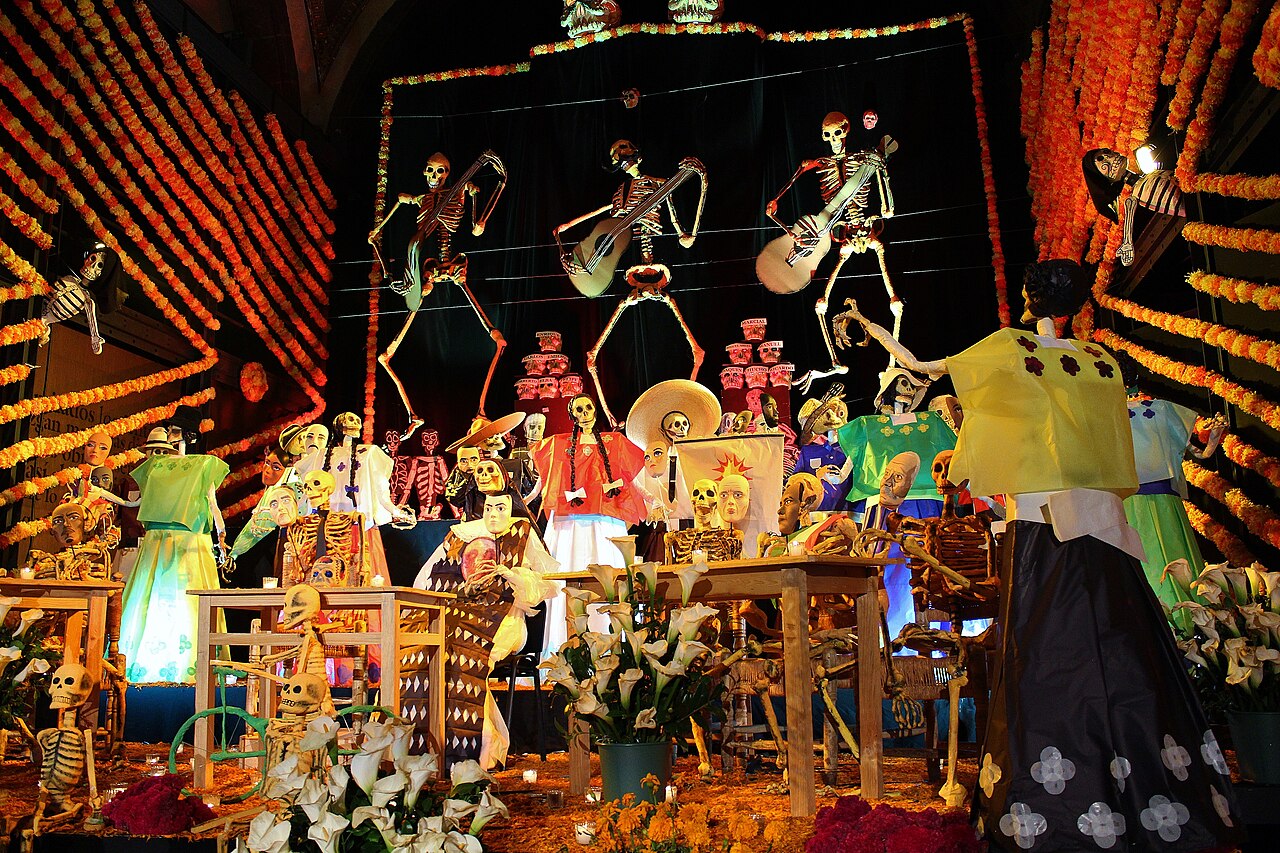
Caption: Mario Yaír TS, CC BY-SA 4.0, via Wikimedia Commons
Día de los Muertos, Spanish for "Day of the Dead," is a Mexican tradition for joyfully remembering and honoring loved ones who have died.
The most moving scene in Pixar's Coco (2017) happens in a quiet bedroom. Miguel sings "Remember Me" to his great-grandmother, Mamá Coco, and something wakes up in her. Her memory of her father returns, and with it his place in the family story.
One song, carried across generations, keeps a man from disappearing. That idea sits at the heart of the celebration, and it has a lot to say about how we show up at work.
What does Día de los Muertos mean?
At its core, the celebration is a reunion. For a short visit, the dead come home and the family remembers them together. Many Latin American communities keep it as well, and UNESCO includes it on its Intangible Cultural Heritage list as the indigenous festivity dedicated to the dead.
Dates vary by region. Families prepare at the end of October. November 1 honors children, often called angelitos, and November 2 honors adults.
"Feliz Día de los Muertos" means "Happy Day of the Dead." The greeting is joyful because the visit is a reunion.
What do the symbols on a Día de los Muertos altar mean?
The ofrenda, or altar, is the heart of the celebration, and every element has a job.
- Levels: two, three or seven tiers, with meanings that shift by region.
- Candles: their light shows the way home.
- Cempasúchil (marigold): the petals guide visitors with bright color and strong scent.
- Papel picado: cut tissue paper that stands for wind and the fragility of life.
- Calaveras: sugar skulls carry the name of the person remembered. La Catrina, the elegant skeleton lady, playfully reminds us that death treats everyone the same.
- Pan de muerto: the sweet bread sits beside the person's favorite foods, water, salt and a photograph.
Why an ofrenda reads like a portrait
An ofrenda shows who someone was. It never lists what they did for a living. Families choose the mole recipe, the cigarette brand, the bolero he sang off-key, the photo where she laughed hardest.
No one places a job title on the altar.
Think about that for a moment. Most of us spend our careers polishing the title, and the people who love us remember the laugh. In Coco's Land of the Dead, a spirit fades once no one living holds his story. Being remembered depends on someone still carrying you.
That is what a personal brand really is: the story people remember and repeat about you when you are not in the room.
The objects a family chooses reveal what they valued, which is why I start with the leadership values that shape your brand.
What does honoring ancestors mean for your personal brand?
Honoring ancestors hands you a story that is already yours, and that story is the raw material of an authentic brand. Yet many immigrant professionals file their grandparents' stories under "private" and bring only the polished version to work. I understand the instinct. But it leaves the best part of you at home.
A grandmother who ran a market stall can explain why her grandchild negotiates with patience and humor. Inherited habits like that are part of how your story becomes your personal brand.
Many Korean families honor ancestors during Chuseok, and many Filipino families visit cemeteries for Undas in early November. These traditions share a strength: keeping elders present grounds people, and grounded people speak with a steadier voice.
Bringing that grounding into a meeting is what authenticity as leadership currency looks like. It is also why I wrote Speak Up! Tell Your Story to Influence Others, a book about using your own background as your leadership story.
One limit matters. Some grief belongs to you alone, and you never owe colleagues a story you are not ready to share. Choosing what to show is also part of leading with integrity.
How do Americans honor their ancestors?
There is no single American way, and that is part of the story. Much of mainstream culture keeps remembrance private: a photo on the mantel, a name passed down, a recipe nobody wrote down but everybody can taste. Memorial Day, the national holiday, honors the military dead specifically. But look at the regional traditions and you find something closer to an ofrenda than you might expect. In the Southern Appalachians, families keep Decoration Day, a late-spring or summer ritual in which a community cleans its cemetery, decorates the graves with flowers, holds a service among the headstones, and shares "dinner on the ground." Folklorists consider these gatherings a forerunner of Memorial Day, and they often include retelling the lives of the people buried there. The dead are not mourned in silence. They are fed, visited, and talked about.
Immigrant families brought their own versions. Many Chinese families, in China and abroad, observe Qingming in early spring, sweeping family graves and bringing food and offerings, much as Korean and Filipino families do. Different calendars, different foods, the same instinct: keep the elders present so the living know where they come from.
What strikes me is how much these traditions share, even when the families have never met. Each one says that a person is more than a résumé, and that who we are is carried by those who came before us. In many workplaces, though, we are taught to leave that part at the door. Imagine what a meeting would feel like if we brought it in.
Can you celebrate Día de los Muertos if you are not Mexican?
Many communities welcome respectful participation, but I would recommend learning the meaning before borrowing the form. Sometimes we tend to get carried away with the colorful and vibrant expressions of this celebration, but imitating or appropriating it is not a choice. And no, this is not Mexican Halloween!
What to avoid:
- Wearing Catrina makeup as a costume without knowing what it honors.
- Touching or taking food from someone else's altar.
- Using it as a corporate theme without involving the people whose tradition it is.
For DEI and ERG leads, the best observances start with colleagues who keep the tradition. Invite them to lead, and keep participation voluntary. When a colleague shares the story behind their altar, a workplace stops being a place where people hide their roots and becomes one where they can bring them in.
The free Your Story worksheet helps you choose which of your own stories belongs on the table.
The stories we carry
Mamá Coco held on to one song for most of her life, and it was enough to bring her father home. You carry people like that too, whether or not you ever build an altar.
The real question is which of their stories deserves a place on your table, and which one you will let your colleagues see.
Discover how your background can shape your leadership story.
Edited with AI