This article contains affiliate links. If you buy something through them, we may earn a small commission at no extra cost to you.
Written by the Speak Up! Team
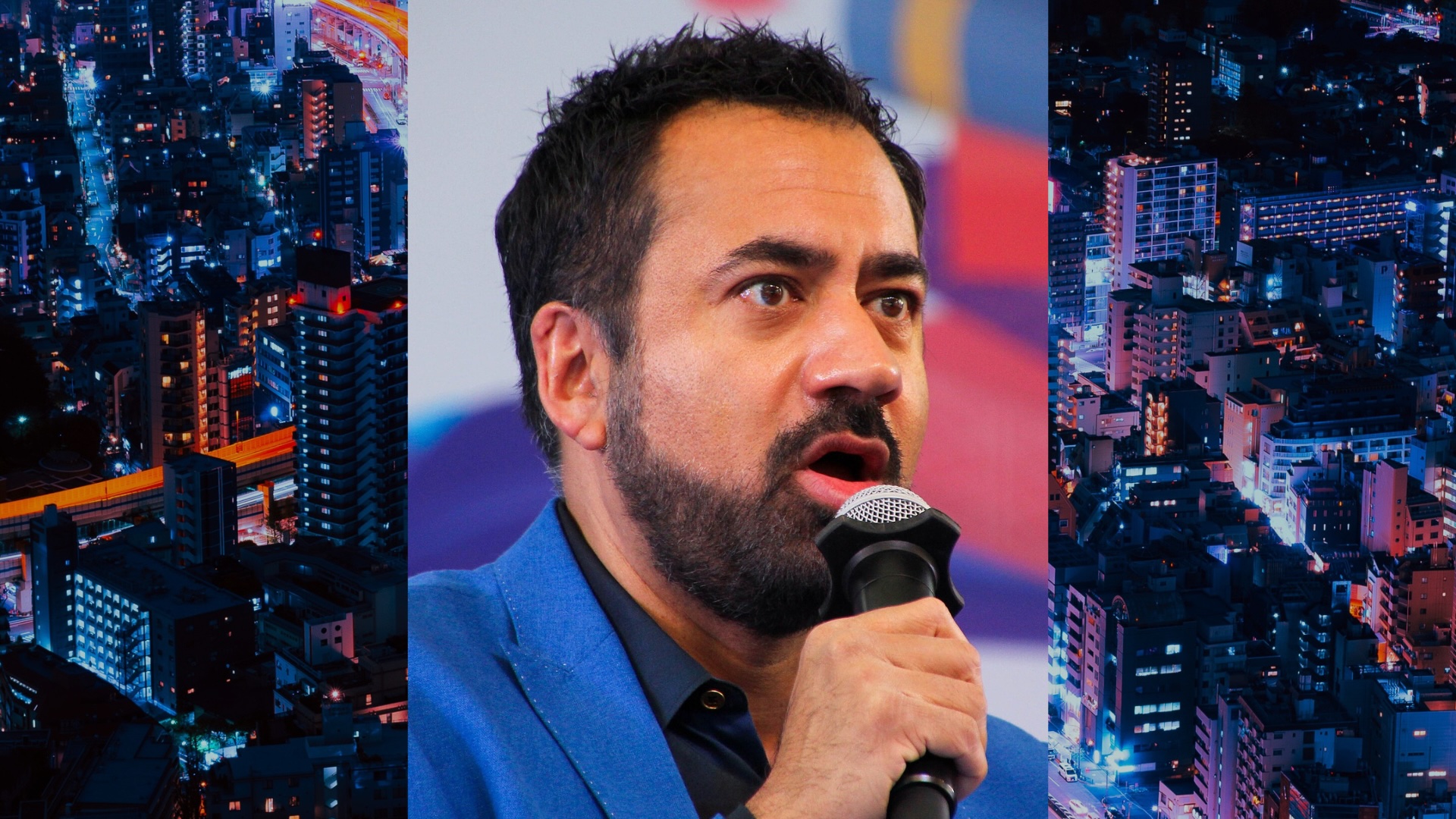
Caption: Marwin Larafa – Unsplash License
Think about the last time you truly believed someone: a business leader, a politician, a boss.
Not because they had the right title, the perfect LinkedIn profile, or a polished press release. But because something they said or did felt unmistakably real. That moment of recognition, that quiet sense of I trust this person, is what executive presence looks like in 2026. And it looks nothing like what we were taught.
Traditionally, in Eurocentric countries, executive presence meant the expensive suit, the commanding voice, the carefully crafted message delivered from a safe distance. It meant projecting certainty even when you had none, and authority even when the ground was shifting beneath your feet. It meant, above all, control of your image, your narrative, your carefully managed public self.
That playbook is failing. Loudly and measurably.
The Data Is Telling Us Something We Already Feel
A recent analysis tracking over 6,000 executive posts and 33 million impressions found that personal stories told by executives vastly outperform every other category of corporate communication by a significant margin. Polished PR releases, slick corporate graphics, and detached industry insights are not just underperforming. They are actively eroding trust.
This should not surprise us. We are living through what many are calling a credibility crisis. Fake news is no longer a fringe phenomenon; it is the environment we all navigate daily. AI-generated content has made it nearly impossible to tell the difference between a real human voice and a sophisticated simulation of one. Deepfakes have moved from political scandals to boardroom communications. In this landscape, the question your audience is asking, whether they are your employees, your investors, or your customers, is no longer what are you saying? It is who are you really?
And the only answer that works is a human one.
This is why building a strong personal brand has never been more urgent. Not as a marketing exercise, but as a leadership necessity.
The Reluctant Leader
Here is what makes this shift genuinely interesting and genuinely difficult. Most senior executives do not want the spotlight. The data confirms what many leadership coaches have observed for years: the majority of top executives suffer from a modern form of "imposter syndrome" around public vulnerability. They are deeply uncomfortable with the idea of sharing personal stories, admitting mistakes, or showing anything that might be perceived as weakness.
I understand this reluctance completely. There is a real and legitimate fear of being mistaken for a social media influencer, or of trading hard-earned professional credibility for a few thousand likes. Nobody who has spent thirty years building expertise wants to be reduced to a personal brand reel.
But here is the tension that today's leaders must sit with: your team needs to see you. Not the curated version of you. Not the version that has all the answers. The version that has navigated uncertainty, made difficult decisions with incomplete information, and come out the other side with something worth sharing. Who are you really?
As I explore in How Other People's Perceptions Control Your Personal Brand, your brand is not what you say about yourself. It is what others experience when they interact with you. And in an era when AI can generate a perfectly written corporate statement in seconds, your human experience is the one thing that cannot be faked. It is, in fact, the ultimate leadership signal.
Bounded Vulnerability: The New Executive Skill
The most effective leaders navigating this shift are not throwing open the doors to their private lives. They are practicing what experts now call bounded vulnerability, a deliberate, purposeful willingness to share personal mistakes, transition stories, and behind-the-scenes lessons in service of their team's trust and growth. The key words here are "deliberate" and "purposeful."
This is not oversharing. It is strategic humanity.
Michael Riedl, CEO of Team Internet, puts it precisely at the World Economic Forum's "Authentic Leadership Revisited" panel: "Authenticity is an observed property: it is in the leader's behaviour. It lives in other people's ability to predict you, not in your ability to describe yourself." This distinction matters enormously. Authenticity is not a personal branding exercise. It is built slowly, through consistency between what you say and what you do, and it is destroyed instantly the moment those two things diverge.
In a world where gaps between corporate words and actual actions are caught and shared in real time, this is not a soft leadership concept. It is a strategic imperative. This is also why authentic storytelling has the power to revolutionize leadership, not by making you more polished, but by making you more real.
Presence Is an Inside Job
So what does modern executive presence actually require? Not a new wardrobe or a media trainer, though those have their place.
It requires an inside-out approach: the willingness to do the internal work before you step into the external spotlight.
It requires emotional intelligence: the ability to read a room, a relationship, or a moment of crisis with sensitivity rather than just strategic calculation.
It requires what some are calling slow listening: genuinely slowing down in high-stakes environments to ensure that the people around you feel seen and valued, rather than managed and processed.
And it requires cognitive flexibility: the ability to hold complexity, sit with ambiguity, and model for your team that uncertainty is not a leadership failure but a human condition.
None of this is weakness. All of it is gravitas.
For multicultural professionals in particular, this inside-out approach holds even deeper significance. Embracing your multicultural background as part of your personal growth story is not a liability in today's leadership landscape; it is one of your most powerful differentiators. The cultural values, lived experiences, and unique perspectives that shaped you are precisely what make your story impossible to replicate.
The Platform Where Presence Lives
One more reality that today's leaders cannot afford to ignore: executive presence no longer lives only in the boardroom. It lives on LinkedIn, in virtual meetings, in the comment you leave on a colleague's post, and in the story you choose, or choose not to tell publicly.
Using social media as a storytelling platform is no longer optional for leaders who want to remain relevant and trusted. The executives who understand this are not becoming influencers. They are becoming human, and in doing so, they are becoming far more powerful.
Your Story Is the Signal
Here is what I want you to take from this: in a world drowning in noise, manufactured content, and eroding institutional trust, your personal story, told honestly, told consistently, told with the full weight of your real experience, is not a nice-to-have communication strategy. It is the foundation of modern leadership credibility.
And if the fear of public vulnerability is what is holding you back, know that overcoming that fear is itself part of the leadership journey. The discomfort you feel stepping into the spotlight is not a sign that you are not ready. It is a sign that what you have to say actually matters.
Executive presence has never really been about the suit. It has always been about whether people believe you. And in 2026, the only way to earn that belief is to show up as undeniably, irreducibly human.
The question is not whether you are ready for that. The question is whether your organization can afford for you not to be.
With this conviction, I wrote Speak Up! Tell Your Story to Influence Others, which holds a 4.5 out of 5 rating on Amazon. It treats your background as the source of your leadership presence, not a gap to cover. You can read more about my own path.
The free worksheet that goes with this article helps you name the values, traits, and cultural strengths behind your own presence.
FAQ
What is leadership presence?
Leadership presence is the way a leader's values, character and conduct become visible to others, so that people trust them and follow. I treat it as something that grows from the inside and shows on the outside.
What are the 7 leadership traits?
No single official list exists, and sources differ. The seven I return to are integrity, accountability, empathy, resilience, clarity, humility, and courage. This is my own working list, not a published standard.
What is another way to describe executive presence?
Traditional alternatives are gravitas, leadership presence, command of the room, and credibility. I prefer "authentic authority," because it points to the source of the quality, not only its effect.
What are the 7 C's of executive presence?
I am not aware of one authoritative "7 C's" model, so I would not present any version as the standard. If you meet a list under that name, check who published it before you rely on it.
What are examples of leaders with executive presence?
The clearest examples are leaders whose composure, position, and treatment of others can be verified in a dated, published report. Look for consistent behavior across many moments, not one polished appearance.
Your own story is the strongest source of presence you have, and my book and site are where I help you start finding it.
Edited with AI