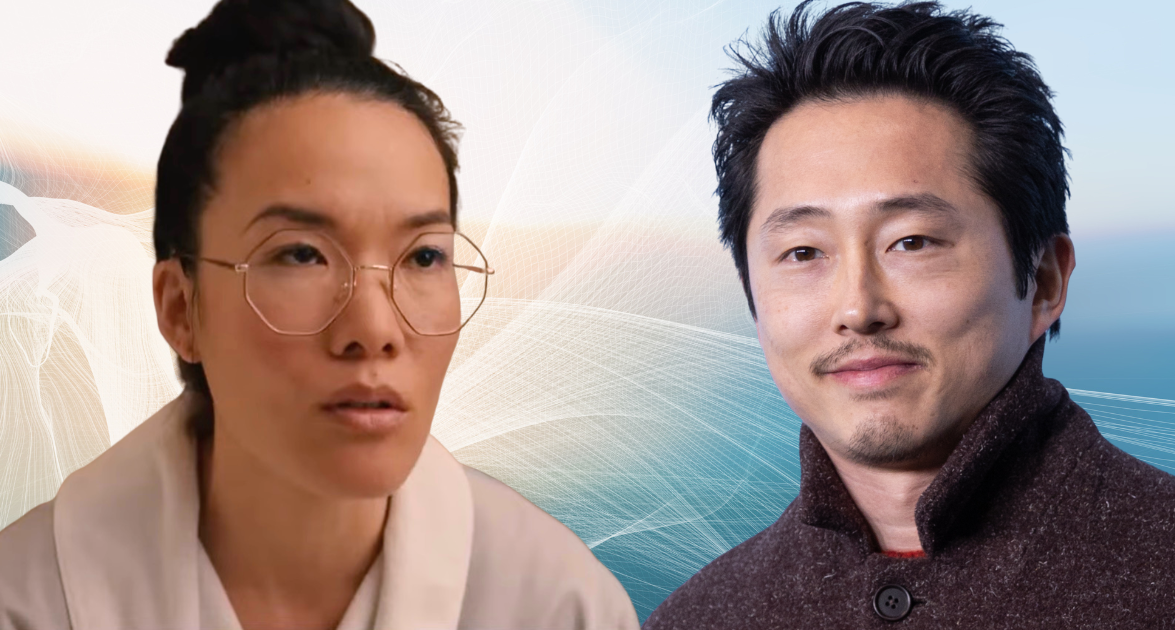
By the Speak Up! Team
A battered pickup truck backs out of a parking space. It nearly collides with a white Mercedes SUV. A horn blares, a hand flips the bird, and two strangers who have spent years holding themselves together come apart in about two minutes.
That is how Beef opens. The Netflix series, created by Lee Sung Jin, premiered on April 6, 2023, and grew out of Lee’s own run-in with an angry driver, which he told Today involved honking and cursing before the other car drove off. It went on to win eight Emmys, including Outstanding Limited or Anthology Series and lead acting awards for Ali Wong and Steven Yeun.
The road rage is only the trigger. What Beef is really about is what two people have been hiding, and what happens when it finally comes out aimed at the wrong person.
In Speak Up! Tell Your Story to Influence Others, I invited you to look back at the character traits you’d call your childhood strengths. Not all of them grew into your best leadership skills. Some you may have reshaped, softened, or tucked away to get by at work or at home. That reshaping is a form of protecting yourself, sometimes as a performance, and it tends to show up when the power in the room or in life isn’t on your side. You trade a piece of yourself for fair treatment, a real seat at the table, a shot at the next opportunity and, in extreme cases, your safety. The bill often comes due later, in your body or your mind. Let’s see what happens next.
Amy: the calm surface
Amy Lau (Ali Wong) looks like she has everything: a successful business, a beautiful home, a deal about to close that will make her very rich, according to the Television Academy’s profile of the show. Her clothes are all white, cream, and tan. Wong told the Academy the neutral palette was a surface, and that “beneath that calm facade, she had all these insane thoughts.”
In the language of character traits, Amy has built a role around composure, hiding almost everything else: her ambition, her resentment, her fear that her life is a performance. Her anger at Danny looks out of proportion because it is carrying years of feelings that she had nowhere else to go.
Danny: the tightly wound one
Danny Cho (Steven Yeun) is a struggling contractor, behind on money and short on luck. Yeun told the Academy that Danny is wound tight and said playing him left him exhausted at the end of every shooting day. Where Amy hides behind polish, Danny hides behind grievance: the guy with a chip on his shoulder, as Lee put it to Today.
Both roles work for a while. Amy’s composure helps her close deals. Danny’s grievance gives him a reason to keep going. Neither role leaves room for the rest of who they are, and that is what gives way in the parking lot. Lee told TV Insider that both characters are trapped in their sense of self.
Why the anger lands on a stranger
Danny and Amy don’t explode at their families, their clients or their bosses. They explode at each other, two people with no claim on their politeness. That is the uncomfortable truth Beef shows about hidden traits: they don’t disappear. They wait for a safe target, or an unsafe moment.
At work, the stranger in the parking lot can look like a new colleague who triggers an old feeling, a vendor who gets the sharp email your manager deserved, or a family dinner where a week of swallowed frustration finally comes out. (Our piece on karmic relationships at work which looks at why certain people seem to set off the same old pattern.)
What culture adds to the picture
Both leads are Asian American, and the show doesn’t treat restraint as a flaw in itself. Research backs that up. In a 2007 study in Emotion, Emily Butler, Tiane Lee and James Gross found that hiding emotions caused social harm, such as less responsive and more hostile conversations, mainly among Americans holding Western European values. The harm was reduced among people holding more Asian values, whose suppression did not cost them as much responsiveness.
In other words, restraint means different things in different cultures. For many people, keeping emotions contained is a form of respect and care for the group. The trouble in Beef starts when restraint stops being a choice and becomes a role, and the traits behind it never get room to breathe. That difference between holding back by choice and hiding by habit is at the heart of [the leadership pillar most people hide](LINK TO NOV 17 EXPLAINER), and of the mental tax of holding back.
The roles Amy and Danny play are held in place by a harsh inner voice. The free Name the Voice worksheet takes you through four steps to hear your inner critic, name it, check its claims and answer back.
Before the parking lot
We all have lived through a moment when something held back came out sideways. Beef stretches that moment across ten episodes. Most of us will never chase a stranger through Los Angeles, but many of us know the email we regret, the snap at someone who didn’t deserve it, the evening when the composure finally slips. Those moments are not who you are. They are signals that a trait you put away has been waiting for room.
The way we behave or react is tinted with past experiences and hidden character traits that unconsciously determine our world perspective. The challenge is to bring them to light through work of self-awareness and self-discovery and make sure the way we allow them in our lives is a conscious decision, and it’s not a pushed-down frustration that will explode in our own faces.
FAQ
What is Beef about?
Beef is a Netflix limited series about two strangers whose road rage incident turns into an escalating feud. Danny Cho (Steven Yeun) is a struggling contractor, and Amy Lau (Ali Wong) is a successful entrepreneur. The feud slowly exposes what each of them has been hiding from their families and from themselves.
Is Beef based on a true story?
Partly. Creator Lee Sung Jin told Today the idea came from his own road rage encounter, in which another driver honked, cursed at him, and drove off. The real incident ended quietly; the show imagines what would happen if it didn’t.
How many Emmys did Beef win?
Beef won eight Emmys for its first season. They included Outstanding Limited or Anthology Series, lead actor for Steven Yeun, lead actress for Ali Wong, and writing and directing for Lee Sung Jin.
Is hiding your emotions always bad?
No, its effects depend partly on culture. A 2007 study in Emotion found that suppressing emotions harmed conversations mainly for people holding Western European values, and much less for people holding more Asian values. Problems tend to grow when hiding stops being a choice and becomes a constant role.